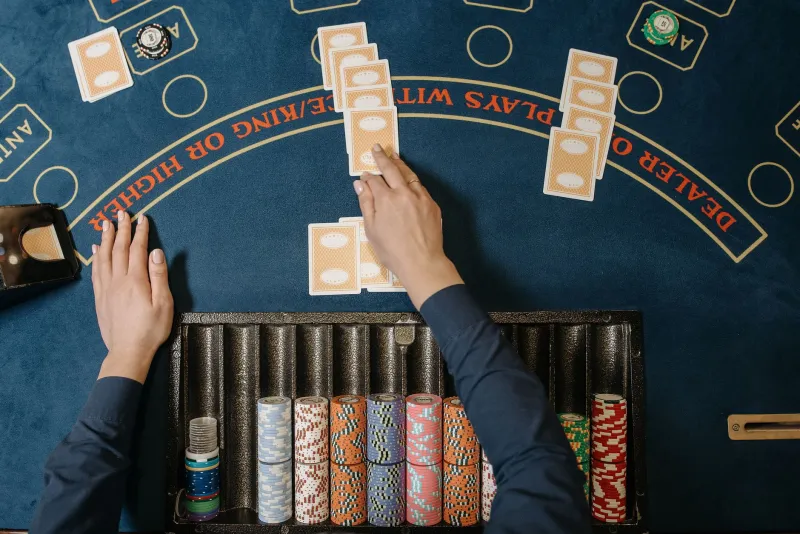
One More Go: The Brain Science Behind Why British Players Can't Walk Away

You know the feeling. You've told yourself twice already that you're done. The clock says it's later than you'd planned. And yet your finger hovers over the button, the wheel, the deal — and something in you just... doesn't stop.
This isn't a character flaw. It isn't weak willpower or poor judgement. It's one of the most well-documented psychological phenomena in behavioural science, and it plays out in casino sessions — online and off — millions of times a day across Britain. Understanding why it happens is the first step to deciding what you actually want to do about it.
What's Actually Going on in Your Head
Let's start with the brain, because that's where this whole story begins.
Every time you place a bet and wait for an outcome, your brain releases a small hit of dopamine — the neurotransmitter most associated with anticipation and reward. Crucially, research has shown that dopamine spikes highest not when you win, but in the moment just before the result is revealed. The suspense itself is the drug.
Now here's where it gets interesting. When a near-miss happens — the reels stop one symbol short of a jackpot, or your hand falls just below a winning total — the brain processes it almost identically to an actual win. The same neural circuits fire. The same surge of "almost" excitement floods through you. And that near-miss whispers something very specific to your decision-making brain: you were that close. Try again.
This is called the near-miss effect, and it's been studied extensively in gambling research. It's not a glitch in your thinking — it's a deeply embedded cognitive pattern that evolved to help us learn from failure. In most areas of life, it's genuinely useful. In a casino environment, it becomes the engine that keeps sessions running long past the point of rational intention.
The Sunk Cost Whisperer
Layered on top of the near-miss effect is another powerful force: sunk cost thinking.
If you've been playing for an hour and you're down on the session, your brain starts doing some very creative accounting. Walking away now means "locking in" the loss. Staying means keeping the possibility of recovery alive. Even if the odds haven't changed — and in most casino games, they genuinely haven't — the emotional logic feels compelling.
This is the sunk cost fallacy in action. Money already spent isn't coming back regardless of what you do next. But the feeling that quitting now makes the loss "official" is remarkably hard to shake. So you stay. One more spin. Just to see.
What makes this particularly thorny is that it isn't irrational in the emotional sense — it follows a kind of internal logic that feels completely reasonable in the moment. The problem is that the logic is built on a false premise.
A Very British Complication
Here's where the cultural dimension comes in — and it's worth taking seriously.
British society has a long and genuinely admirable tradition of perseverance. We celebrate the underdog who keeps going. We respect the person who "sees it through." From wartime stoicism to sporting comebacks, the cultural narrative around not giving up runs deep. It's baked into how we think about ourselves.
In most contexts, that's a strength. But in a gaming session, that same cultural wiring can quietly work against you. Stopping when you're down can feel like quitting — and quitting, in the British cultural imagination, carries a faint whiff of failure. So the decision to walk away gets tangled up with identity. It's no longer just about the game. It's about what kind of person you are.
This doesn't mean British players are more vulnerable to problem gambling than anyone else. But it does mean the internal conversation around stopping may carry extra emotional weight — and that's worth being aware of.
The Exact Moment It Shifts
Researchers who study gambling behaviour talk about something called the "loss of control threshold" — a point in a session where decision-making noticeably changes character. Before that threshold, players are broadly rational: weighing odds, managing budgets, making considered choices. After it, decisions become more reactive, more emotional, and more focused on the immediate moment.
The triggers for crossing that threshold vary. Fatigue plays a role — the prefrontal cortex, which handles rational planning, is one of the first brain regions to suffer when you're tired. Emotional state matters too: players who started a session feeling stressed or frustrated tend to hit that threshold earlier. And crucially, time itself is a factor. Extended sessions gradually erode the cognitive resources needed to make clear-headed decisions.
This is one of the reasons that setting a time limit — not just a money limit — is considered one of the most effective tools in responsible gaming. Your budget might still have headroom, but your brain might already be running on empty.
Practical Ways to Reclaim the Decision
None of this is meant to be fatalistic. Knowing how these mechanisms work gives you genuine power over them.
Set a hard stop before you start. Not a vague intention to "probably stop around midnight" — an actual, fixed point. Write it down if it helps. The goal is to make the decision when your thinking is clear, rather than in the heat of a session.
Name what you're feeling before each spin. It sounds a bit odd, but briefly checking in — am I enjoying this, or am I chasing? — activates the rational parts of your brain and interrupts the automatic loop.
Use the tools that are there for you. UK-licensed casinos are required to offer session time reminders, deposit limits, and cooling-off options. These aren't just regulatory box-ticking — they're genuinely useful circuit-breakers, and there's no shame in using them.
Reframe walking away. Given what we've said about British cultural attitudes to perseverance, it might help to consciously redefine what stopping actually means. Choosing to end a session on your own terms — rather than being dragged out by an empty wallet or a very late hour — is itself a form of control. That's not quitting. That's playing smart.
The Takeaway
The "just one more" moment isn't a mystery. It's a predictable, well-understood product of how human brains respond to uncertainty, near-misses, and loss. Add a cultural backdrop that quietly valorises never giving up, and you've got a combination that deserves a bit of honest attention.
None of which means you can't enjoy a casino session — online or anywhere else. It just means going in with your eyes open, knowing what your brain is likely to do, and having a plan that's yours rather than one your dopamine system wrote for you.