After You, No After You: Why British Gamblers Find It Impossibly Hard to Call It a Night
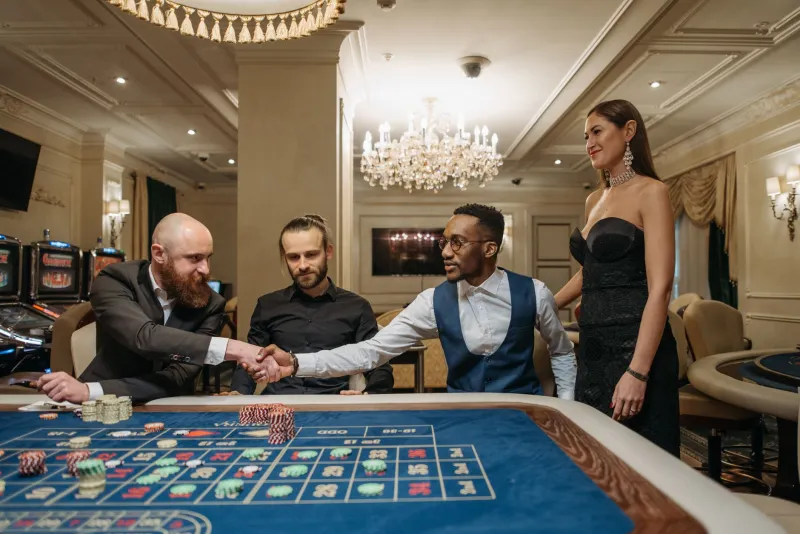
Picture the scene. It's gone eleven on a Friday, you've had a reasonable session, and you're genuinely ready to log off. Then a mate in the group chat says, "Go on, one more spin." Or a pop-up offers you a reload bonus. Or the dealer at your live casino table gives you that expectant look.
And somehow, despite everything, you stay.
This isn't weakness. It isn't even particularly about gambling. It's something far more ingrained — something that gets drummed into British children practically from birth. It's politeness. And when it collides with the mechanics of modern gambling, it becomes one of the most expensive social habits you've probably never thought about.
The Great British Art of Not Making a Fuss
British culture has a complicated relationship with the word "no." We soften it. We apologise before it. We dress it up as "maybe another time" or "I'm alright, cheers" or, most dangerously of all, "go on then, just the one."
Sociologists have written at length about what's sometimes called British conflict avoidance — the tendency to prioritise social harmony over personal preference. It shows up in queuing etiquette, in the way we respond to "how are you?" with "not bad" regardless of how we actually feel, and in the almost physical discomfort many of us experience when we have to decline something directly.
In everyday life, this is mostly harmless. In a gambling context, it can become genuinely costly.
When "Being Polite" Means Staying at the Table
Research into social facilitation and gambling behaviour consistently shows that people make riskier, longer-lasting decisions when they're in a group — or even when they feel observed. But British players face an added layer: the cultural weight of not wanting to be the one who ruins the vibe.
Think about what happens when you're playing online with friends over a voice call, or when you're at a physical casino with a group. Announcing that you're done doesn't just mean you're done — it implicitly signals that the evening is winding up. It shifts the energy. And for many British players, that social cost feels higher than the financial one.
Dr. Mark Griffiths, a behavioural psychologist at Nottingham Trent University who has studied gambling habits extensively, has noted that social pressure is one of the most underappreciated factors in extended play. It's not just peer pressure in the teenage sense — it's the ambient, almost invisible pressure of not wanting to seem like a killjoy.
And casinos, both online and off, know this. They design for it.
How the Industry Leans Into Our Agreeableness
Bonus offers framed as personal gestures. "We've saved this just for you." Live dealers who say "good luck" as you consider leaving. Loyalty programmes that reward continued play with points you'd feel wasteful leaving on the table. None of these are accidents.
Online platforms are particularly adept at packaging continued play as something that would be almost rude to refuse. A reload bonus that expires at midnight. A tournament leaderboard where you're sitting tantalizingly close to the top. These mechanics don't just appeal to greed — they appeal to our sense of obligation. To our hatred of waste. To our deeply British feeling that leaving something unfinished is somehow bad manners.
Compare this to gambling behaviour observed in, say, Germany or the Netherlands, where cultural norms place a higher value on directness. Studies looking at cross-cultural gambling patterns suggest that players from more direct-communication cultures are quicker to disengage when their pre-set limits are reached — in part because the social friction of saying "I'm done" simply doesn't register the same way.
For British players, that friction is very real indeed.
The "Just One More" Trap in Slow Motion
Here's how it typically unfolds. You've set yourself a loose budget for the evening. You hit it, or you're close. But then:
- A friend says they're on a hot streak and wants company
- A bonus offer lands in your inbox at precisely the wrong moment
- You've almost cleared a wagering requirement and stopping now feels like leaving money on the table
- The live dealer smiles and says "another hand?"
Any one of these, in isolation, is manageable. But they rarely arrive in isolation. And each time you override your own intention to stop — not because you want to keep playing, but because stopping feels awkward or wasteful or antisocial — you're reinforcing a habit loop that has nothing to do with enjoying the game.
This is sometimes called compliance escalation in psychological literature: each small "yes" makes the next one easier to give, and harder to refuse.
Reframing What "Polite" Actually Means
Here's a thought worth sitting with: is it actually polite to keep gambling when you've decided you don't want to?
Not really. Genuine politeness — the kind that actually serves the people around you — involves being honest. Saying "I'm going to call it there, have a good one" is, in fact, the more socially mature move. It models healthy boundaries. It gives others permission to do the same.
The version of politeness that keeps you at the table isn't really about other people at all. It's about your own discomfort with the moment of refusal. And that's worth recognising, because once you see it clearly, it loses quite a bit of its power.
Practical Ways to Make Leaving Easier
If any of this feels familiar, a few small shifts can make a real difference:
Pre-commit out loud. Before a session, tell whoever you're playing with that you're planning to stop at a certain point. Making it social in advance takes the awkwardness out of the exit.
Use platform tools as your excuse. Deposit limits, session timers, and reality checks aren't just responsible gaming features — they're ready-made, blame-free reasons to stop. "My timer's gone off" is a perfectly British way to exit without drama.
Practise the two-word decline. "I'm done" is a complete sentence. You don't need to justify it, apologise for it, or soften it into something that sounds like an invitation to negotiate.
Recognise the bonus offer for what it is. A reload offer isn't a gift from a friend. It's a commercial prompt. You wouldn't feel rude declining a leaflet on the high street — this is the same thing, dressed up more attractively.
The Bigger Picture
British culture has given us a lot of wonderful things — dry wit, the ability to queue calmly under extraordinary circumstances, and a genuine warmth that tends to reveal itself once the initial reserve melts away. But it's also handed us some habits that don't always serve us well, and the compulsive agreeableness that makes it hard to say no to another bet is one of them.
The good news is that awareness is genuinely half the battle. Once you can see that the pull to keep playing is sometimes about social discomfort rather than desire, you can start making choices that are actually yours — not ones made on behalf of an imaginary audience who, let's be honest, probably didn't notice you left anyway.