Do Safety Nets Make Us Jump Higher? The Surprising Truth About Responsible Gaming Tools

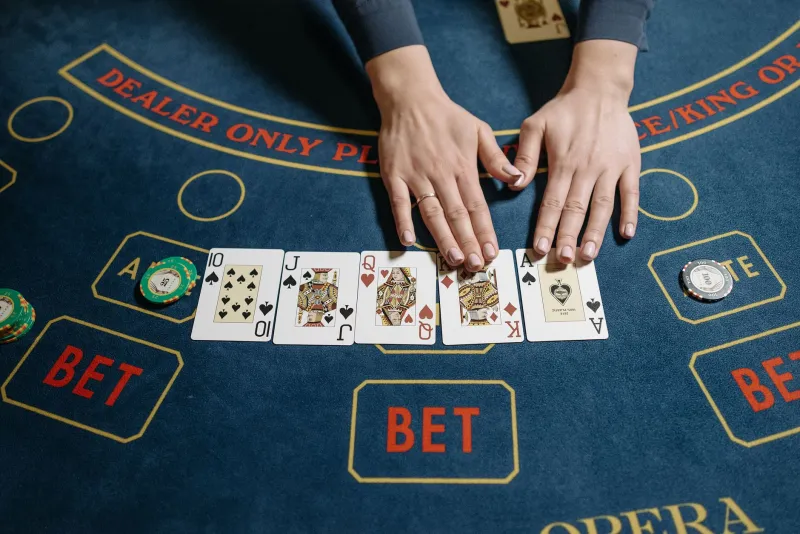
Photo: Giles Laurent, CC BY-SA 4.0, via Wikimedia Commons
Picture this: you set a £50 deposit limit on your favourite casino account on a Monday morning, feeling pretty virtuous about the whole thing. By Friday, you've hit that ceiling, and instead of logging off, you find yourself hunting for a second account, or simply waiting for the limit to reset — and then depositing the full £50 in one go rather than spreading it across the week. Sound familiar? You're not alone, and you're not doing anything wrong. You've just bumped into one of the quirkier corners of behavioural psychology.
The UK's approach to responsible gambling is genuinely world-leading. The Gambling Commission mandates a raft of player protection measures, and operators are under increasing pressure to make these tools prominent and effective. But here's the uncomfortable question that researchers and gaming psychologists are starting to ask more openly: do some of these safety mechanisms occasionally produce the opposite of their intended effect?
The Licence to Spend Problem
There's a well-documented phenomenon in behavioural economics called moral licensing — the idea that doing something virtuous in one area gives your brain a quiet permission slip to be a bit less virtuous in another. Classic studies have shown that people who buy organic groceries are statistically more likely to behave selfishly afterwards, as if the good deed balanced the cosmic books.
The same logic can creep into gambling habits. Setting a deposit limit feels responsible — because it is. But that feeling of responsibility can subtly shift how you interact with the money you do deposit. Instead of treating each session with caution, some players subconsciously treat the limit as a pre-approved budget: the full amount is now fair game, rather than a ceiling you hope never to hit. The limit becomes a target.
Dr. Mark Griffiths, a professor of behavioural addiction at Nottingham Trent University, has written extensively about the gap between the availability of responsible gaming tools and their effective use. The tools themselves aren't the problem — it's the psychological context in which players engage with them that matters enormously.
When Countdown Clocks Speed Things Up
Many online casinos now display session timers or reality-check pop-ups — little reminders that ping up after 30 or 60 minutes to let you know how long you've been playing and how much you've spent. The intention is obviously sound: break the trance, encourage reflection, prompt a sensible decision.
But for some players, particularly those who are already in an excited or frustrated state, these prompts can trigger what psychologists call reactance — a knee-jerk resistance to feeling controlled. Being told you've been playing for an hour doesn't always inspire a calm review of your evening; sometimes it just makes you want to prove that you're in charge of your own choices, which can paradoxically mean playing more aggressively to reassert that control.
There's also the pacing effect to consider. If you know a pop-up is coming at the 30-minute mark, you might unconsciously rush your play beforehand — placing larger bets or making quicker decisions to fit more action into the window before the interruption arrives. The timer, designed to slow you down, has accidentally sped you up.
The Self-Exclusion Paradox
GAMSTOP, the UK's national self-exclusion scheme, is a genuinely important piece of infrastructure for people who recognise they need a hard stop. Registering removes your access to all GAMSTOP-affiliated UK licensed sites for a minimum of six months — it's a serious commitment, and for many people it's exactly the circuit-breaker they need.
But research into self-exclusion schemes globally has consistently found a complicated picture. A significant proportion of people who self-exclude do eventually seek out non-GamStop sites, often within weeks. This isn't a failure of the individual — it's a predictable consequence of removing access without simultaneously addressing the underlying urge. The exclusion can also create a kind of scarcity effect: the forbidden fruit problem. What was once a casual habit becomes charged with a sense of transgression, which for some people actually heightens the appeal.
This doesn't mean self-exclusion is a bad idea — far from it. For people in genuine crisis, it can be life-changing. The point is that the tool works best when it's part of a broader strategy that includes support, community, and ideally professional help, rather than functioning as a standalone fix.
What Actually Works, Then?
Behavioural scientists increasingly argue that the most effective interventions are those that work with the grain of human psychology rather than against it. A few principles that research suggests make a real difference:
Friction at the point of action. Adding small delays or confirmation steps before a deposit is processed — rather than a limit set days in advance — is more likely to interrupt impulsive decisions. The pause happens when it actually matters.
Personalised nudges over blanket rules. A player who bets on football once a fortnight has very different needs from someone playing slots daily. Tailored prompts based on individual patterns are more relevant and therefore more likely to land.
Framing losses accurately. Research consistently shows that people underestimate how much they've spent during a session. Clear, prominent running totals — not buried in a menu — help players maintain an accurate picture without feeling lectured.
Opt-out rather than opt-in. When safer behaviours are the default setting and players have to actively choose to change them, uptake is dramatically higher. The UK's ongoing push for operators to make deposit limits easier to set (and harder to raise quickly) follows this logic.
Knowing Your Own Patterns
The most useful thing any of this research can offer isn't a verdict on whether the tools are good or bad — it's a mirror. If you've ever set a deposit limit and felt strangely compelled to use all of it, or found a reality-check notification mildly irritating, that's worth noticing. Not as evidence that you have a problem, but as useful data about how your particular brain interacts with these systems.
VeryWell Casino UK's whole ethos is built around helping players stay in the game for the right reasons — enjoyment, entertainment, the occasional flutter on the football. The best version of responsible gaming isn't a set of rules imposed from outside; it's a genuine understanding of your own habits, triggers, and tendencies. The tools are there to support that understanding, not to replace it.
If you're ever unsure about your own patterns, the NHS, GamCare, and Gambling Therapy all offer free, confidential support — no judgement, just practical help from people who genuinely know their stuff.