Slots, Poker, or the Footy? What Your Favourite Flutter Reveals About Who You Really Are

Photo by Photo by Richard Boyle on Unsplash on Unsplash
We've all got that one mate who absolutely cannot fathom why you'd sit at a blackjack table for two hours when you could be spinning a slot and getting on with your evening. And you've probably got equally strong feelings in the opposite direction. The thing is, you're both right — for yourselves, at least. Because the games we're drawn to aren't random. They reflect something pretty fundamental about how our brains are wired, how we relate to risk, and what we're actually looking for when we decide to have a punt.
Psychologists have been poking around this territory for decades, and what they've found is genuinely fascinating. So let's have a proper look at what your game of choice might be telling the world — and more usefully, telling you.
The Slot Spinner: Sensation Seeker in Disguise
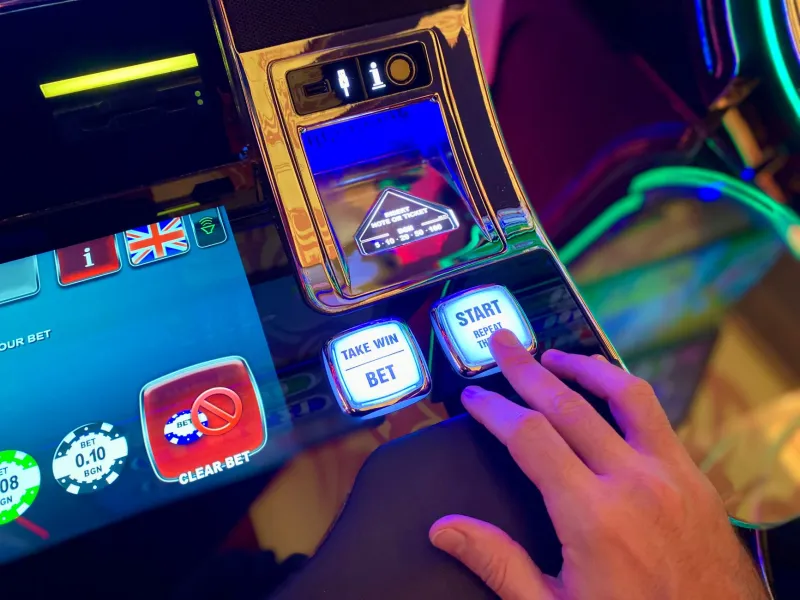
Slots are the most popular form of online gambling in the UK by a considerable margin, and the people who love them tend to share a few interesting traits. Research using the Big Five personality model consistently links slot preference with higher scores in openness to experience and a particular flavour of sensation-seeking — not the cliff-jumping, bungee-cord variety, but a genuine appetite for novel stimuli, bright patterns, unexpected outcomes, and rapid sensory feedback.
Slot players often describe the appeal in terms of immersion — the way a good game pulls you into its world, whether that's ancient Egypt, a Manchester pub quiz, or some bonkers space adventure. This isn't mindless escapism (well, not entirely). It reflects a brain that responds strongly to visual and auditory variety, and that finds the unpredictability of random outcomes genuinely exciting rather than anxiety-inducing.
Interestingly, slots attract a broader demographic than almost any other gambling format — they're not the preserve of any particular age, income, or background. What tends to unite slot fans is a preference for solo entertainment and a lower need to compete directly against other people. If you're someone who enjoys getting lost in a box set or a video game, there's a decent chance slots scratch a similar itch.
The Table Game Regular: Control Is Everything
Now we're talking about a very different creature. Whether it's blackjack, roulette, baccarat, or three-card poker, the table game devotee is typically someone who wants to feel like their decisions matter. Even in games with a significant luck component, the rituals, strategies, and choices involved in table play give a sense of agency that pure slot spins simply don't provide.
Psychologists link this preference with higher conscientiousness — a personality trait associated with planning, rule-following, and a preference for structured environments. Blackjack basic strategy, for instance, is a learnable system. People who are drawn to that kind of mastery often extend it to other areas of life: they're the ones who actually read the terms and conditions, who track their spending in a spreadsheet, who have opinions about the optimal way to load a dishwasher.
There's also a social dimension here. The live casino table — whether physical or online — has a particular atmosphere of quiet seriousness that suits people who enjoy measured, focused interaction without the chaos of a crowded pub. You're engaging with others, but on your own terms and within a clear set of rules. For a certain kind of personality, that's enormously appealing.
The Sports Bettor: The Analyst Who Thinks They've Cracked It
Ah, the sports bettor. Every pub in Britain has at least one — usually found nursing a pint, phone in hand, muttering something about expected goals and the Hammers' injury list. Sports betting is uniquely intertwined with British culture in a way that has no real parallel elsewhere, and the psychology of the people who love it is distinct from other gambling formats in some telling ways.
Sports bettors tend to score highly on need for cognition — a measure of how much someone enjoys effortful thinking and analysis. They genuinely believe, often correctly, that knowledge and skill give them an edge. The research is a bit more sobering on this point (the house edge is real, and even sharp bettors rarely beat the market long-term), but the cognitive engagement is itself a significant part of the appeal. It's not just gambling; it's argument. It's the satisfaction of being right.
There's also a strong social bonding element. Sharing a bet with mates before a match, debating the odds, the collective groan or cheer when the result comes in — sports betting is often as much about community and shared experience as it is about the money. If you find yourself enjoying the research almost as much as the outcome, you're probably a classic sports bettor: the person who's convinced that this time, they've spotted something the bookmakers missed.
The Live Dealer Fan: The Social Butterfly of Online Gaming
Live dealer games — where real croupiers run the action via video stream — occupy a fascinating psychological niche. They combine the strategic elements of table games with a social atmosphere that approximates (but doesn't quite replicate) the buzz of a real casino floor. The people who seek this out are telling you something important: they want connection.
Psychological research on live dealer preferences points toward higher scores in extraversion and agreeableness — people who are energised by interaction, who enjoy the small talk with the dealer, who like the sense that there's a real human on the other side of the screen. During and after the pandemic, live dealer game traffic increased significantly in the UK, which makes a certain kind of sense: they offered social texture during a period when actual social interaction was impossible.
Live dealer fans also tend to be more comfortable with ambiguity than pure table game strategists. They're not necessarily there to execute a perfect blackjack strategy; they're there for the experience. The game is the backdrop; the atmosphere is the point.
What If You Play Everything?
Plenty of players happily move between formats depending on their mood, and that's actually psychologically coherent too. Research suggests that versatile gamblers — people without a strong single preference — tend to score higher in adaptability and lower in rigidity, approaching different situations with different tools rather than defaulting to a single strategy.
If that's you, you might find that your game choice on any given evening is a decent barometer of your mental state. Feeling sociable? Live dealer. Fancy some quiet, immersive escapism? Slots. Wound up after work and needing to feel in control? Blackjack. Want to shout at your telly about a referee's decision? You know where the sportsbook is.
The Bigger Picture
None of this is destiny, of course. Personality traits are tendencies, not sentences. But understanding why you're drawn to certain games — what psychological need they're meeting — is genuinely useful information. It helps you play more intentionally, spot when a habit might be serving a purpose you hadn't consciously acknowledged, and maybe even understand your mates a little better next time they insist on doing something completely baffling with their Saturday afternoon.
At VeryWell Casino UK, we reckon the smartest gaming is self-aware gaming. Knowing your own style isn't just interesting — it's the foundation of a genuinely enjoyable experience.