Stiff Upper Lip, Loose Cards: The Real Tells British Poker Players Don't Know They're Giving Away
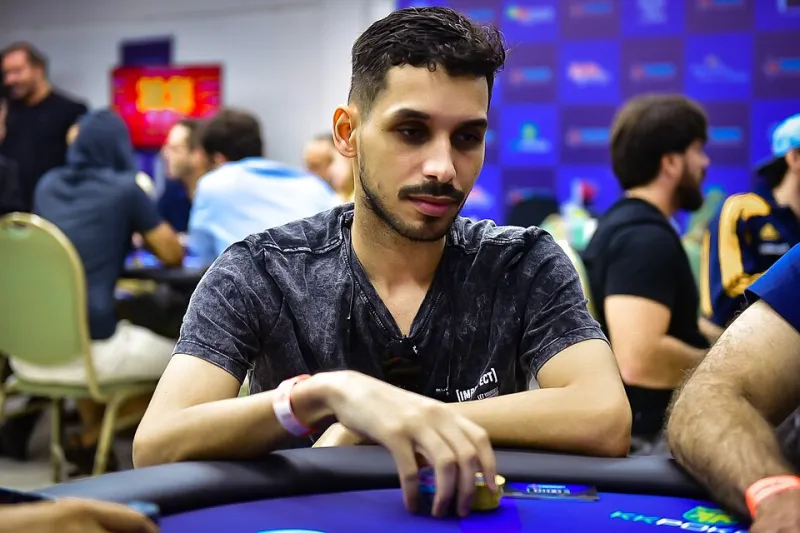
Photo: Valdezinha, CC0, via Wikimedia Commons
There's a certain mythology around the British poker player. Calm, unreadable, politely devastating. The sort of person who could be holding a royal flush or a pair of twos and you'd never quite know from the expression on their face. It's a flattering image. It's also, largely, nonsense.
The truth is that British players carry a very specific set of cultural tells — behavioural patterns so deeply baked into how we communicate that most of us don't even register we're doing them. And at a poker table, whether that's a live casino in Mayfair or an online cash game at midnight, those patterns can cost you real money.
The Politeness Problem
Let's start with the most British tell of all: the apologetic fold.
Watch a group of UK players at a table and you'll notice something that rarely shows up in American or Eastern European games. When a British player decides to fold — particularly after a significant bet — there's often a tiny, almost imperceptible softening of the shoulders. Sometimes it's accompanied by a slight exhale, or even a faint upward twitch of the eyebrows, as if to say sorry about this, nothing personal.
It seems harmless. It isn't. That micro-expression of social deference tells experienced opponents two things simultaneously: you were genuinely considering the call, and you've decided the risk isn't worth it. In other words, you've just handed them a window into your decision-making process for free.
Dr. Peter Collett, a behavioural psychologist who has studied British non-verbal communication extensively, has noted that the British are unusually adept at suppressing large emotional signals while inadvertently leaking smaller ones. We've been trained since childhood not to make a fuss — but all that suppressed energy goes somewhere, and at a poker table, it tends to go into the hands, the eyes, and the timing of bets.
The Betting Hesitation That Says Everything
Timing is one of the most underrated tells in poker, and British players have a particular vulnerability here.
In cultures where aggressive negotiation is normalised — think of how differently haggling plays out in a Turkish bazaar versus a British car boot sale — there's a natural comfort with the pause-as-power move. Many international players use deliberate hesitation as a bluffing tool, holding back their bet to suggest uncertainty when they're actually confident.
British players tend to do the opposite. We hesitate when we're genuinely uncertain, and we move quickly when we're comfortable. It sounds obvious written down, but it's remarkable how consistently this pattern holds. If you're at a live table and you notice a British player take an unusually long time before raising, there's a decent chance they're wrestling with a marginal hand rather than slow-playing a monster.
The fix? Introduce artificial variation into your timing. Deliberately pause on strong hands. Move quickly sometimes when you're unsure. It feels unnatural at first — almost rude, in that particularly British way — but it's one of the single most effective adjustments you can make.
Eye Contact and the Great British Discomfort
Here's something that doesn't get discussed enough in poker strategy guides: British players are, on average, less comfortable with sustained eye contact than many of their international counterparts.
This matters at a live table. The classic "staredown" is a staple of poker mythology, but for a lot of UK players, holding another person's gaze across a felt table feels socially aggressive in a way that's genuinely uncomfortable. So we look away. We glance at our chips. We study the community cards with slightly more interest than they warrant.
Experienced opponents — particularly those from cultures where direct eye contact is more commonplace — know how to read this. A player who breaks eye contact immediately after placing a large bet is often doing so because they're uncertain about the outcome. Conversely, a player who maintains relaxed eye contact after a bluff is either very experienced or very lucky.
If you're playing live games, practise holding a neutral, comfortable gaze. You don't need to stare anyone down — that's its own kind of tell. Just don't let social discomfort be the thing that gives you away.
The Online Dimension
You might be thinking: surely none of this applies online? No one can see your face through a screen.
True, but tells don't disappear in digital poker — they just change shape. Betting patterns, timing, and bet sizing all carry information in online games, and British players bring their cultural habits to the virtual table just as readily as the physical one.
The tendency to make "polite" minimum raises rather than aggressive overbet bluffs, for instance, is something that shows up consistently in UK player data. There's a cultural reluctance to appear greedy or overly aggressive, even in a context where aggression is literally the correct strategy. Playing it safe — making the "reasonable" bet rather than the maximally exploitative one — is a habit that leaks money over time.
Practical Steps for Cleaner Play
So what can you actually do about all this? A few things worth trying:
Record yourself. If you play live, some casinos and home games allow recording. Watch it back with the sound off. You'll be amazed what you notice.
Build a pre-bet routine. A consistent physical ritual before every bet — touching your chips the same way, taking the same breath — masks the timing variations that give information away.
Embrace the uncomfortable bet. Next time the correct play is a large, aggressive raise, make it without the mental caveat of but I don't want to seem rude. Poker is not a social contract.
Study your opponents' cultural baseline. If you're playing against international players, remember that their version of "neutral" may look very different from yours. What reads as confidence in a British player might read as hesitation in someone from a different background.
The Bottom Line
The stiff upper lip isn't a poker strategy — it's a social convention. And social conventions, however deeply ingrained, are readable. The British tendency toward restraint, politeness, and conflict-avoidance produces a very specific set of behavioural patterns that sharp players learn to exploit.
The good news? Once you know what you're giving away, you can start controlling it. Awareness is the first move. Everything else follows from there.